



- Joined
- Oct 12, 2023
- Posts
- 255
- Reaction score
- 69
In 2026, domain name trends are shaped by AI, branding shifts, security expectations, and how people search and trust websites.
As we enter 2026, the domain industry continues to evolve with new technologies and shifting user behaviors. According to Verisign, global domain registrations have rebounded in growth – reaching 378.5 million by late 2025 (up 4.5% year-over-year) – signaling robust demand for online presence.
From the dominance of legacy extensions starting to wane, to the rise of AI-driven naming tools and increased security requirements, several key trends are shaping how businesses choose and manage their domain names. Below are the seven major domain name trends to watch in 2026, with insights into what they mean for businesses worldwide.
A domain name is often the first signal of credibility a business sends online. It appears in search results, browser bars, email addresses, and AI-generated answers.
The growth in registered domain names worldwide means competition for attention continues to rise. Understanding domain name trends helps businesses evaluate naming options without guessing or reacting too late.
While .com remains the most recognized domain extension, accounting for roughly 159 million registered domains, this shift reflects availability as much as branding. Many short, clear .com names are already taken.
In 2025, generic top-level domains (gTLDs) – such as .tech, .shop, .app, .online, and .xyz – passed 43 million registrations globзally (+21 year-over-year growth), indicating that many new registrations now happen outside legacy extensions.
By mid-2025, non-.coms covered 46% of Top-100 aftermarket domain deals. ICANN is preparing to accept applications for another wave of new TLDs in 2026, which could introduce fresh industry-specific and regional extensions.
Newer extensions alongside options like .it.com offer more naming room to secure a meaningful and shorter name, and more descriptive options. Examples such as studio.it.com or secure.it.com show how businesses combine clarity with flexibility.
In 2026, choosing a domain will be about balancing the global trust of a .com (still seen as a “gold standard” for credibility) versus the branding opportunities of newer TLDs. The trend is clear: the internet’s naming system is more diverse than ever, and the goal is not replacement of .com, but expansion of credible alternatives.
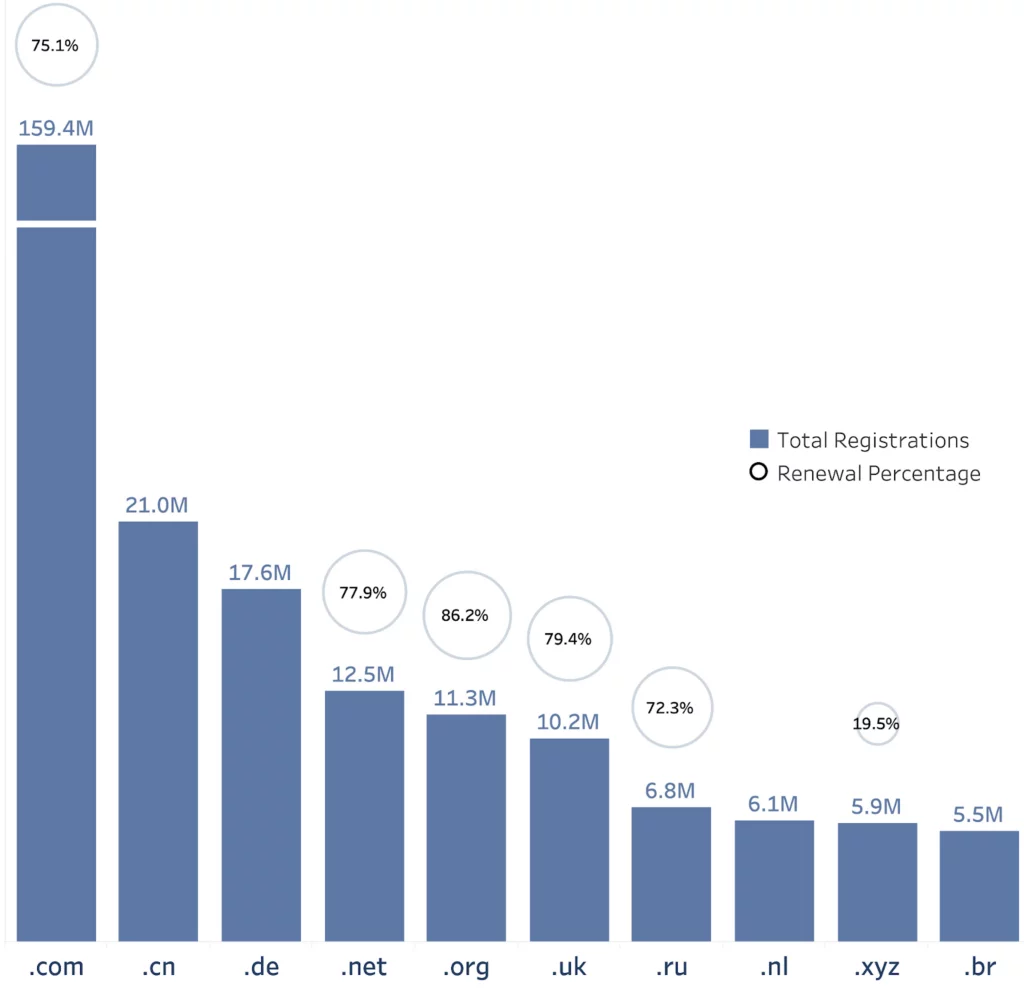
Source: The Domain Name Industry Brief (DNIB), Q3 2025
One of the strongest domain name trends in 2026 is the use of extensions that signal what a business does. The ongoing boom in artificial intelligence is propelling niche domain extensions into the mainstream.
Domains tied to technology, commerce, and digital services continue to grow faster than average. According to EuroDNS, technology-focused extensions like .ai, .io, .shop and .cloud are among the fastest-growing categories globally.
Perhaps the biggest story continues to be the .ai domain. As of late 2025 there were over 908,000 .ai domains registered (growing at ~1% per week) and it’s on track to surpass 1 million registrations by early 2026. In fact, 29% of the top 100 domain sales in H1 2025 were .ai names (with a dozen .ai domains selling for over $100,000 each).
The broader trend is that meaningful, industry-aligned TLDs – whether repurposed country codes or new gTLDs – have now become mainstream for tech companies. Extensions like .ai, .io, .vr, .dev, .gg (gaming) and others allow innovators to get short names that convey what they do at a glance. A visitor also does not need to guess the purpose of a site like analytics.it.com or payments.it.com.
This aligns with how AI systems and search engines summarize businesses. Clear naming improves understanding across platforms, including voice and AI-driven discovery.
AI does not just affect search results. It also shapes how domain names are researched and selected. Domain registrars and marketplaces leverage AI to help users brainstorm names, check availability across TLDs, and even evaluate the branding potential of a domain.
Most major registrars now offer AI-assisted naming tools that analyze keywords, availability, and patterns. These systems generate options based on industry terms, tone, and length. The integration of AI makes the daunting task of finding a great domain faster and more efficient for entrepreneurs – an algorithm can sift through millions of combinations in seconds, whereas a human might spend days on brainstorming.
For example, GoDaddy advertised an AI-powered business name generator (as part of its domain search) during the 2025 Super Bowl, highlighting the industry’s pivot toward AI-driven services.
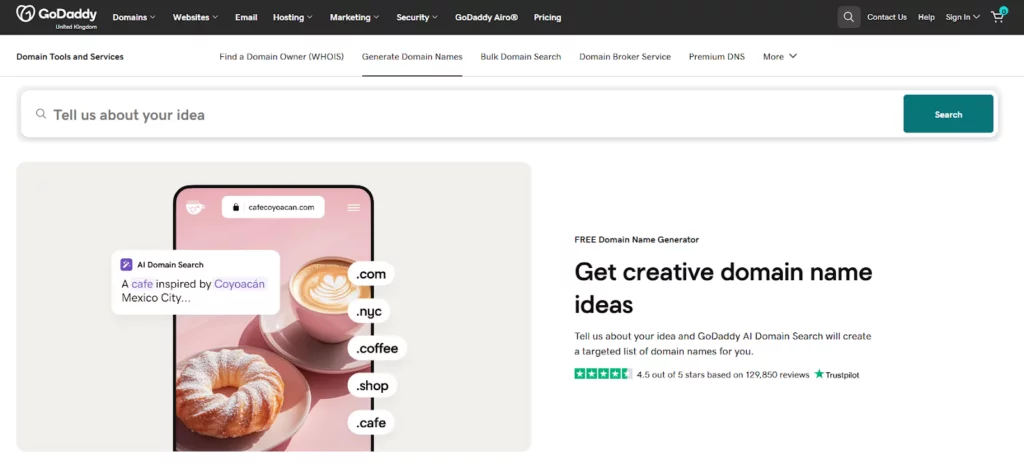
Source: GoDaddy
Beyond name generation, AI is improving domain management and security behind the scenes. Registries and large portfolio owners are using machine learning to detect fraud, cybersquatting, and unusual domain activity in real time
AI tools also assist in domain valuation, analyzing sales data and market trends to estimate what a given domain is worth – useful in the domain aftermarket if you’re buying or selling a name. Even in marketing, AI can predict which domain name (out of a shortlist) might resonate best with customers by comparing linguistic patterns or running quick user preference tests.
In 2026, expect AI’s role to expand further: from voice-assisted domain search (asking a voice assistant to find you a domain) to AI-driven personalization (suggestions tuned to your industry and style preferences). The key takeaway for businesses is to take advantage of these AI tools when securing a domain.
Short domain names continue to carry long-term value. The trend in 2026 is firmly toward brevity and brandability – domains that are easy to say, easy to spell, and stick in the mind. Many businesses are getting creative by using new TLDs to form concise phrases or “domain hacks.” However, a note of caution: make sure the resulting phrase is clear and not confusing (avoid unintentionally spelling something awkward across the dot!).
According to sales data published by NameBio, the majority of high-value domain sales remain under eight characters. Short names reduce typing errors, work better in voice search, and look cleaner across devices. In practice, this means trying to keep your domain under about 12 characters if possible, and avoid any unnecessary words.
In 2026, brandable names often matter more than exact keyword matches. Search engines evaluate content quality and authority, not just keywords in a domain name.
If you can’t get a one-word .com, consider achieving brevity with a different TLD or a slight tweak (for example, opting in for a subdomain or adding a minimal modifier to your brand name). Names like new.it.com show how brevity supports recognition without relying on long descriptive phrases.
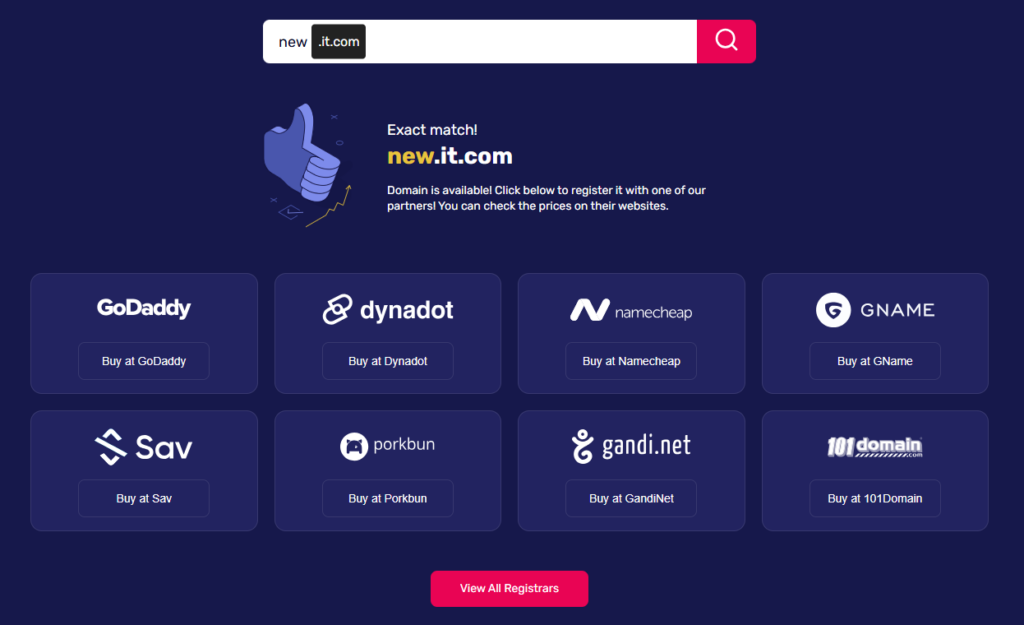
Source: get.it.com
With cyber threats on the rise, domain security has become a top priority for website owners in 2026. No longer an afterthought, strengthening the security of your domain is now viewed as essential to protect your business and customers. It affects trust, rankings, and user behavior.
One trend is the broader adoption of DNS Security Extensions (DNSSEC), which add a layer of cryptographic authentication to DNS lookups. DNSSEC helps prevent attackers from hijacking your DNS records (for instance, it mitigates cache poisoning or spoofing attacks). Although historically DNSSEC uptake was low, awareness grew in 2024-2025 after some high-profile domain hijack incidents. In 2025 experts noted that DNSSEC is no longer “nice-to-have” but a vital tool for any serious business online
More registrars and DNS providers are offering easy DNSSEC setups, and some national domains even consider making it mandatory. We’re likely to see DNSSEC adoption continue to increase in 2026 as companies prioritize safeguarding their domains’ integrity.
Beyond DNSSEC, basic security best practices are now standard. Websites must use HTTPS encryption by default – an unsecured HTTP website not only undermines user trust but will soon trigger warnings in browsers. Google continues to reinforce HTTPS as a baseline standard. According to Google Chrome transparency reports, over 98% of page loads now use HTTPS, and warnings for unsecured sites continue to expand.
Email authentication tied to domains is also more common. Anti-spoofing protocols such as DMARC and SPF reduce phishing risks and protect brand reputation. Those ensure scammers can’t forge emails from your domain, thereby protecting your brand’s reputation and your customers from phishing. Users have become much more alert to security signals – things like the padlock icon, a valid certificate, and emails that pass verification.
Some newer extensions require HTTPS by default, setting expectations early. For businesses, security-related domain settings increasingly influence how platforms and users assess legitimacy.
it.com Domains takes a proactive and structured approach to preventing abuse and fraud across its namespace. This includes following ICANN best practices, working closely with accredited registrars, and using a mix of proprietary tools, third-party monitoring services, and trusted abuse-reporting partners. The registry also cooperates with trademark arbiters, evaluates copyright complaints, and collaborates with global law enforcement when required. From early brand protection measures, such as a dedicated Sunrise Period, to ongoing partnerships with organizations like the Brand Safety Alliance, it.com Domains focuses on maintaining a secure and trustworthy domain environment.
Expect 2026 to bring even more emphasis on security from all angles – Google and other tech giants are effectively forcing the web toward 100% encryption, and regulators may push for stronger domain security compliance.
Country-code domains remain relevant, especially for businesses focused on specific markets. On the flip side of global tech trends, many businesses are also doubling down on local domain extensions to build trust with regional audiences.
Country-code top-level domains (ccTLDs like .us, .de, .uk, .fr, .in) are increasingly used by companies to emphasize their presence in a target country or market. In fact, ccTLD registrations reached 144.8 million by Q3 2025 (up 3.4% YoY), showing steady growth.
ccTLDs represent nearly 40% of all registered domains worldwide, with strong adoption in Europe and Asia. In the U.S., regional trust plays a smaller role, but local relevance still matters.In China and Russia, we see a related phenomenon of “digital sovereignty” driving domain choices: China’s .cn is the world’s most-used ccTLD with over 21 million domains registered, aided by policies that encourage Chinese businesses to use domestic domains.
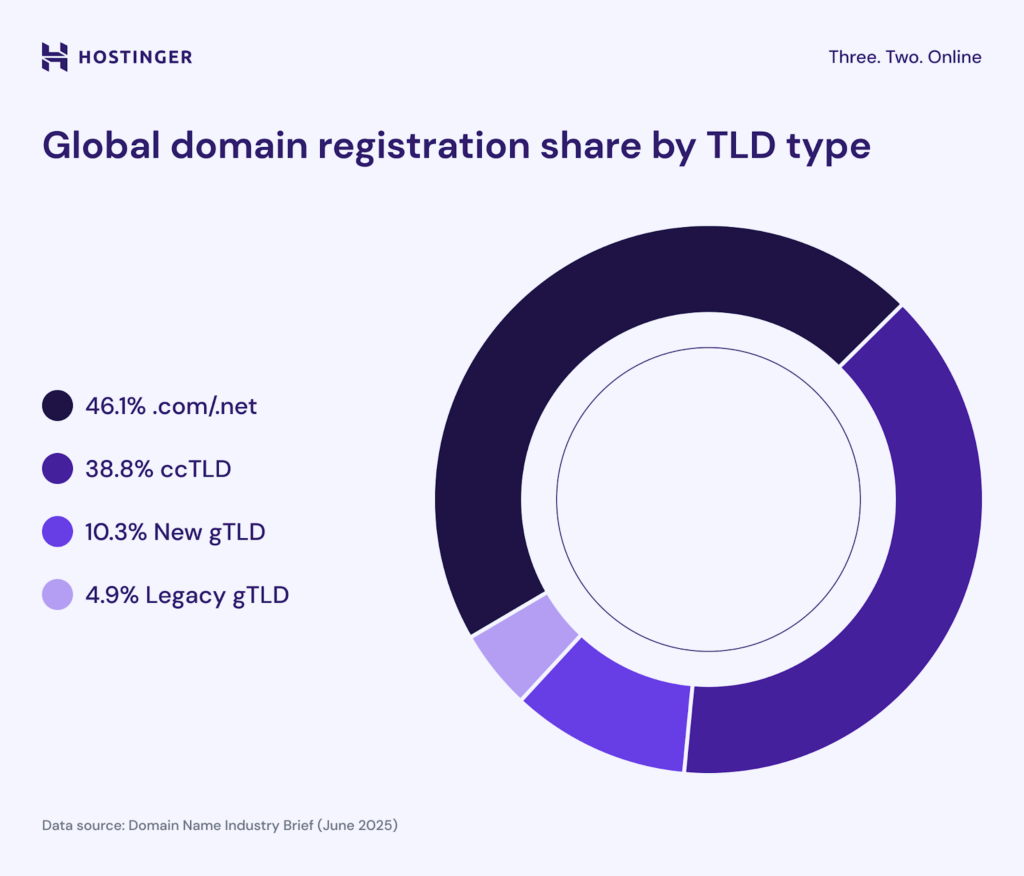
Source: Hostinger
Beyond country codes, there’s also a rise in city and regional TLDs (like .nyc, .london, .asia, .africa) which offer hyper-local branding opportunities. For small and medium businesses, this trend means you shouldn’t overlook ccTLDs as part of your domain strategy – especially if your primary market is a specific country or city.
On the other hand, there is a way for brands to show their country association coupled with the .com extension. For example, for Italian brands and startups, it’s crucial that a domain name allows them to be ‘from Italy’, while remaining familiar and recognizable in a global environment, which is precisely what the .it.com suffix enables.
Overall in 2026, using a local domain extension is a savvy way to build customer trust and signal relevance in target markets, complementing your global presence with a regional touch. Many companies even run a localized site on a ccTLD in parallel with their .com, tailoring content to that market.
If you prefer to stay within .com, examples such as support.it.com paired with region-specific content show how domains support layered strategies rather than single-use choices.
Search no longer ends with blue links. AI assistants and AI-powered search summarize businesses, suggest services, and surface brands without traditional browsing.
This changes how domain name trends connect to visibility. Domains that align with brand names, services, and content structure are easier for AI systems to categorize.
That said, including relevant keywords in your domain can still provide an SEO edge, especially in terms of user click-through rates and initial relevance. Choosing a domain name with strategic keywords remains a useful tactic for improving search visibility, as it can signal topical relevance.
In 2026, the consensus is that a great domain name supports SEO but doesn’t guarantee it – you still need quality content and optimization on your site. When brainstorming domains, consider SEO as one factor: does the name hint at your product or service? If so, great, but avoid stuffing keywords unnaturally. As one industry writer says, “If your domain sounds like a real brand, people will treat it like one – and so will search engines.”
Domain name trends in 2026 reflect fewer shortcuts and more signals. Businesses benefit from evaluating options based on clarity, credibility, and flexibility rather than chasing trends alone.
Domain name trends in 2026 point toward clarity, flexibility, and trust. Businesses are expanding within and beyond .com, using industry-aligned extensions, and choosing names that work across search engines and AI platforms. Short, secure, and understandable domain names support long-term visibility.
Key domain name trends include wider use of non-.com extensions, growth in industry-specific domains and subdomains, AI-assisted naming tools, stronger security standards, and shorter brandable names.
The future of domain names centers on clarity and trust. Domains increasingly support how search engines, AI platforms, and users understand a business rather than acting as ranking shortcuts.
Running out of domain names is unlikely. New top-level domains and creative naming combinations continue to expand availability across industries and regions.
A website remains a core digital asset in 2026. Domains support visibility across search engines, AI assistants, email, and brand communications.
Technology-related extensions and flexible naming structures continue to grow, driven by AI, digital services, and global online activity.
Keen to explore domain name trends for your business? Visit it.com Domains blog and follow us on social media.
Continue reading at the it.com Domains blog...
As we enter 2026, the domain industry continues to evolve with new technologies and shifting user behaviors. According to Verisign, global domain registrations have rebounded in growth – reaching 378.5 million by late 2025 (up 4.5% year-over-year) – signaling robust demand for online presence.
From the dominance of legacy extensions starting to wane, to the rise of AI-driven naming tools and increased security requirements, several key trends are shaping how businesses choose and manage their domain names. Below are the seven major domain name trends to watch in 2026, with insights into what they mean for businesses worldwide.
Why Domain Name Trends Matter in 2026
A domain name is often the first signal of credibility a business sends online. It appears in search results, browser bars, email addresses, and AI-generated answers.
The growth in registered domain names worldwide means competition for attention continues to rise. Understanding domain name trends helps businesses evaluate naming options without guessing or reacting too late.
More Businesses Look Beyond Legacy Extensions
While .com remains the most recognized domain extension, accounting for roughly 159 million registered domains, this shift reflects availability as much as branding. Many short, clear .com names are already taken.
In 2025, generic top-level domains (gTLDs) – such as .tech, .shop, .app, .online, and .xyz – passed 43 million registrations globзally (+21 year-over-year growth), indicating that many new registrations now happen outside legacy extensions.
By mid-2025, non-.coms covered 46% of Top-100 aftermarket domain deals. ICANN is preparing to accept applications for another wave of new TLDs in 2026, which could introduce fresh industry-specific and regional extensions.
Newer extensions alongside options like .it.com offer more naming room to secure a meaningful and shorter name, and more descriptive options. Examples such as studio.it.com or secure.it.com show how businesses combine clarity with flexibility.
In 2026, choosing a domain will be about balancing the global trust of a .com (still seen as a “gold standard” for credibility) versus the branding opportunities of newer TLDs. The trend is clear: the internet’s naming system is more diverse than ever, and the goal is not replacement of .com, but expansion of credible alternatives.
Source: The Domain Name Industry Brief (DNIB), Q3 2025
Boom in AI and Tech-focused Domains
One of the strongest domain name trends in 2026 is the use of extensions that signal what a business does. The ongoing boom in artificial intelligence is propelling niche domain extensions into the mainstream.
Domains tied to technology, commerce, and digital services continue to grow faster than average. According to EuroDNS, technology-focused extensions like .ai, .io, .shop and .cloud are among the fastest-growing categories globally.
Perhaps the biggest story continues to be the .ai domain. As of late 2025 there were over 908,000 .ai domains registered (growing at ~1% per week) and it’s on track to surpass 1 million registrations by early 2026. In fact, 29% of the top 100 domain sales in H1 2025 were .ai names (with a dozen .ai domains selling for over $100,000 each).
The broader trend is that meaningful, industry-aligned TLDs – whether repurposed country codes or new gTLDs – have now become mainstream for tech companies. Extensions like .ai, .io, .vr, .dev, .gg (gaming) and others allow innovators to get short names that convey what they do at a glance. A visitor also does not need to guess the purpose of a site like analytics.it.com or payments.it.com.
This aligns with how AI systems and search engines summarize businesses. Clear naming improves understanding across platforms, including voice and AI-driven discovery.
AI Influences How Domain Names Are Chosen
AI does not just affect search results. It also shapes how domain names are researched and selected. Domain registrars and marketplaces leverage AI to help users brainstorm names, check availability across TLDs, and even evaluate the branding potential of a domain.
Most major registrars now offer AI-assisted naming tools that analyze keywords, availability, and patterns. These systems generate options based on industry terms, tone, and length. The integration of AI makes the daunting task of finding a great domain faster and more efficient for entrepreneurs – an algorithm can sift through millions of combinations in seconds, whereas a human might spend days on brainstorming.
For example, GoDaddy advertised an AI-powered business name generator (as part of its domain search) during the 2025 Super Bowl, highlighting the industry’s pivot toward AI-driven services.
Source: GoDaddy
Beyond name generation, AI is improving domain management and security behind the scenes. Registries and large portfolio owners are using machine learning to detect fraud, cybersquatting, and unusual domain activity in real time
AI tools also assist in domain valuation, analyzing sales data and market trends to estimate what a given domain is worth – useful in the domain aftermarket if you’re buying or selling a name. Even in marketing, AI can predict which domain name (out of a shortlist) might resonate best with customers by comparing linguistic patterns or running quick user preference tests.
In 2026, expect AI’s role to expand further: from voice-assisted domain search (asking a voice assistant to find you a domain) to AI-driven personalization (suggestions tuned to your industry and style preferences). The key takeaway for businesses is to take advantage of these AI tools when securing a domain.
Short and Brandable Names Stay in Demand
Short domain names continue to carry long-term value. The trend in 2026 is firmly toward brevity and brandability – domains that are easy to say, easy to spell, and stick in the mind. Many businesses are getting creative by using new TLDs to form concise phrases or “domain hacks.” However, a note of caution: make sure the resulting phrase is clear and not confusing (avoid unintentionally spelling something awkward across the dot!).
According to sales data published by NameBio, the majority of high-value domain sales remain under eight characters. Short names reduce typing errors, work better in voice search, and look cleaner across devices. In practice, this means trying to keep your domain under about 12 characters if possible, and avoid any unnecessary words.
In 2026, brandable names often matter more than exact keyword matches. Search engines evaluate content quality and authority, not just keywords in a domain name.
If you can’t get a one-word .com, consider achieving brevity with a different TLD or a slight tweak (for example, opting in for a subdomain or adding a minimal modifier to your brand name). Names like new.it.com show how brevity supports recognition without relying on long descriptive phrases.
Source: get.it.com
Enhanced Security and Trust Becomes an Expectation
With cyber threats on the rise, domain security has become a top priority for website owners in 2026. No longer an afterthought, strengthening the security of your domain is now viewed as essential to protect your business and customers. It affects trust, rankings, and user behavior.
One trend is the broader adoption of DNS Security Extensions (DNSSEC), which add a layer of cryptographic authentication to DNS lookups. DNSSEC helps prevent attackers from hijacking your DNS records (for instance, it mitigates cache poisoning or spoofing attacks). Although historically DNSSEC uptake was low, awareness grew in 2024-2025 after some high-profile domain hijack incidents. In 2025 experts noted that DNSSEC is no longer “nice-to-have” but a vital tool for any serious business online
More registrars and DNS providers are offering easy DNSSEC setups, and some national domains even consider making it mandatory. We’re likely to see DNSSEC adoption continue to increase in 2026 as companies prioritize safeguarding their domains’ integrity.
Beyond DNSSEC, basic security best practices are now standard. Websites must use HTTPS encryption by default – an unsecured HTTP website not only undermines user trust but will soon trigger warnings in browsers. Google continues to reinforce HTTPS as a baseline standard. According to Google Chrome transparency reports, over 98% of page loads now use HTTPS, and warnings for unsecured sites continue to expand.
Email authentication tied to domains is also more common. Anti-spoofing protocols such as DMARC and SPF reduce phishing risks and protect brand reputation. Those ensure scammers can’t forge emails from your domain, thereby protecting your brand’s reputation and your customers from phishing. Users have become much more alert to security signals – things like the padlock icon, a valid certificate, and emails that pass verification.
Some newer extensions require HTTPS by default, setting expectations early. For businesses, security-related domain settings increasingly influence how platforms and users assess legitimacy.
it.com Domains takes a proactive and structured approach to preventing abuse and fraud across its namespace. This includes following ICANN best practices, working closely with accredited registrars, and using a mix of proprietary tools, third-party monitoring services, and trusted abuse-reporting partners. The registry also cooperates with trademark arbiters, evaluates copyright complaints, and collaborates with global law enforcement when required. From early brand protection measures, such as a dedicated Sunrise Period, to ongoing partnerships with organizations like the Brand Safety Alliance, it.com Domains focuses on maintaining a secure and trustworthy domain environment.
Expect 2026 to bring even more emphasis on security from all angles – Google and other tech giants are effectively forcing the web toward 100% encryption, and regulators may push for stronger domain security compliance.
Local and Regional Domains Support Trust
Country-code domains remain relevant, especially for businesses focused on specific markets. On the flip side of global tech trends, many businesses are also doubling down on local domain extensions to build trust with regional audiences.
Country-code top-level domains (ccTLDs like .us, .de, .uk, .fr, .in) are increasingly used by companies to emphasize their presence in a target country or market. In fact, ccTLD registrations reached 144.8 million by Q3 2025 (up 3.4% YoY), showing steady growth.
ccTLDs represent nearly 40% of all registered domains worldwide, with strong adoption in Europe and Asia. In the U.S., regional trust plays a smaller role, but local relevance still matters.In China and Russia, we see a related phenomenon of “digital sovereignty” driving domain choices: China’s .cn is the world’s most-used ccTLD with over 21 million domains registered, aided by policies that encourage Chinese businesses to use domestic domains.
Source: Hostinger
Beyond country codes, there’s also a rise in city and regional TLDs (like .nyc, .london, .asia, .africa) which offer hyper-local branding opportunities. For small and medium businesses, this trend means you shouldn’t overlook ccTLDs as part of your domain strategy – especially if your primary market is a specific country or city.
On the other hand, there is a way for brands to show their country association coupled with the .com extension. For example, for Italian brands and startups, it’s crucial that a domain name allows them to be ‘from Italy’, while remaining familiar and recognizable in a global environment, which is precisely what the .it.com suffix enables.
Overall in 2026, using a local domain extension is a savvy way to build customer trust and signal relevance in target markets, complementing your global presence with a regional touch. Many companies even run a localized site on a ccTLD in parallel with their .com, tailoring content to that market.
If you prefer to stay within .com, examples such as support.it.com paired with region-specific content show how domains support layered strategies rather than single-use choices.
Domains Support Visibility Across Platforms
Search no longer ends with blue links. AI assistants and AI-powered search summarize businesses, suggest services, and surface brands without traditional browsing.
This changes how domain name trends connect to visibility. Domains that align with brand names, services, and content structure are easier for AI systems to categorize.
That said, including relevant keywords in your domain can still provide an SEO edge, especially in terms of user click-through rates and initial relevance. Choosing a domain name with strategic keywords remains a useful tactic for improving search visibility, as it can signal topical relevance.
In 2026, the consensus is that a great domain name supports SEO but doesn’t guarantee it – you still need quality content and optimization on your site. When brainstorming domains, consider SEO as one factor: does the name hint at your product or service? If so, great, but avoid stuffing keywords unnaturally. As one industry writer says, “If your domain sounds like a real brand, people will treat it like one – and so will search engines.”
What This Means for Businesses in 2026
Domain name trends in 2026 reflect fewer shortcuts and more signals. Businesses benefit from evaluating options based on clarity, credibility, and flexibility rather than chasing trends alone.
Domain name trends in 2026 point toward clarity, flexibility, and trust. Businesses are expanding within and beyond .com, using industry-aligned extensions, and choosing names that work across search engines and AI platforms. Short, secure, and understandable domain names support long-term visibility.
FAQs
What are the domain name trends for 2026?
Key domain name trends include wider use of non-.com extensions, growth in industry-specific domains and subdomains, AI-assisted naming tools, stronger security standards, and shorter brandable names.
What is the future of domain names?
The future of domain names centers on clarity and trust. Domains increasingly support how search engines, AI platforms, and users understand a business rather than acting as ranking shortcuts.
Will we ever run out of domain names?
Running out of domain names is unlikely. New top-level domains and creative naming combinations continue to expand availability across industries and regions.
Is it worth creating a website in 2026?
A website remains a core digital asset in 2026. Domains support visibility across search engines, AI assistants, email, and brand communications.
Which domain is booming?
Technology-related extensions and flexible naming structures continue to grow, driven by AI, digital services, and global online activity.
Keen to explore domain name trends for your business? Visit it.com Domains blog and follow us on social media.
Continue reading at the it.com Domains blog...


