




- Joined
- Oct 12, 2023
- Posts
- 255
- Reaction score
- 69
For decades, success in PR (public relations) depended on relationships, media lists, and persistence. The ability to get coverage often came down to who you knew rather than what you knew. But as AI reshapes how information is discovered, consumed, and surfaced, the rules of PR are changing.
Brett Farmiloe, founder and CEO of Featured.com, has had a front-row seat to this transformation. Having built a platform that connects experts with journalists and publishers, he's now focused on what comes next: AI-powered PR workflows that help professionals spend less time searching and more time contributing meaningful expertise.
In the interview with it.com Domains, Farmiloe shares why AI is disrupting PR, where most companies are getting it wrong, and why the future belongs to experts who can become trusted sources in an AI-driven world.
According to Farmiloe, the traditional PR model had a fundamental flaw before AI arrived.
"PR was built on access, not outcomes," he says. "Whether you got coverage came down to who you knew and how big your media list was, which rewarded relationships and budgets over actually having something worth saying. The best expert in a field could be completely invisible just because no reporter had their number."
The biggest inefficiency wasn't necessarily writing pitches or creating content. It was the work that happened before any of that.
"The matching," Farmiloe explains. "Figuring out which journalist needs what, right now, and getting in front of them before the story's written. Most of PR's hours went into research, list-building, and follow-ups, not the insight a source actually brings or the communications strategy of a company."
He believes that alone made PR ripe for AI disruption.
"Any industry where the core workflow is still 'search, match, and follow up by hand' is a good use case for AI disruption."
One example he points to is founders and subject matter experts who possess valuable insights but struggle to gain visibility.
"Previously, the founder would have trouble getting quoted anywhere because they weren't aware of the opportunities, and how their expertise fits. The moment they could see and respond to live journalist requests, they were in national outlets within weeks. The expertise was always there; access was the bottleneck."
Perhaps most surprising, he says, is how much of PR remains manual.
"We see smart, busy executives blocking off 15–30 minutes a day on their calendar to open and respond to Help a Reporter Out (HARO) queries. That's time spent on scanning emails and pitching, instead of executing strategy that will move their business forward."

Source: Unsplash
For Farmiloe, the turning point came when AI began changing how people discover information online.
"When I watched search traffic to publishers go into AI answers," he recalls. "We'd built a business connecting experts to publishers so readers would find them, and suddenly the reader wasn't clicking through to the publisher at all."
Instead, users were increasingly receiving synthesized answers directly from AI systems.
"The front page had moved into the AI model, and being 'the source' stopped meaning ranking a page and started meaning getting cited by an AI."
That realization fundamentally changed how he viewed the future of PR. The challenge was no longer simply earning media coverage. It was becoming the source that AI systems reference when generating answers.
75–80% of PR professionals were expected to use AI tools for content creation, media monitoring, and campaign analytics by the end of 2025. However, despite the attention AI receives for content generation, Farmiloe believes most people misunderstand where its real value lies.
"Discovery," he says without hesitation. "Finding the right opportunity and matching it to the right expert at the right moment, which is where the hours go and where machines are great."
But the expertise itself still belongs to humans. In fact, over 40% of PR practitioners expect AI to complement their work rather than replace it.
"The judgment of what to say still belongs to the human. The search for where to say it shouldn't."
This distinction is at the heart of his philosophy about AI in communications.
"If your AI is helping you pitch more people faster, you're using it backwards."
According to Farmiloe, one of the biggest mistakes companies make is treating volume as success.
"AI tempts you to 10x your outreach when the whole game is relevance. The mistake is automating the pitch instead of automating the research that tells you whether to pitch at all."
Source: Unsplash
Journalists have become increasingly vocal about the flood of AI-generated pitches arriving in their inboxes. PR professionals echo that: about a quarter mention that journalists are receiving too many AI-generated pitches. Farmiloe sees this firsthand.
"The second it's used to mass-produce pitches nobody needed," he says when asked where AI-generated PR content goes wrong. "Every journalist I've ever spoken with is concerned about the AI slop that lands in their inbox."
The issue isn't necessarily the quality of the writing itself.
"The failure isn't the writing quality, it's using AI to scale noise instead of to find signal."
Reporters, he says, are becoming exceptionally good at identifying low-value AI outreach.
"Almost instantly. Reporters read more cold pitches than anyone, so a templated AI pitch is very easy to spot. As a result, the bar for pitching has gone up. Now, a generic pitch signals you didn't even bother."
The numbers support this trend.
"When we brought back Help a Reporter Out (HARO) last year, we knew we would tackle lots of issues based around quality and trust. About 21% of all pitches that go through HARO are 100% AI-generated, while 35% of journalists who use HARO to find a source completely opt out of seeing a 100% AI-generated pitch."
The result is a growing divide.
"There's people opting in a little too far on the source side, while journalists are responding by opting out."
This challenge helped shape Featured's vision for an AI-powered PR co-pilot.
"Featured is an AI co-pilot for PR that finds media opportunities and helps you act on them," Farmiloe explains.
Those opportunities can include journalist requests, podcasts, bylined articles, speaking engagements, awards, and AI visibility opportunities. According to MuckRack, automation of such tasks can save PR teams an average of 6.2 hours per week.
"Through a chat interface and automated workflows, Featured's AI does the discovery and matching of those opportunities."
He compares the product to modern aviation.
"It's almost like when you fly on an airplane. The take-off and landing are typically handled by human pilots. The rest of the flight is typically automated, with the pilots on standby."
"That's similar to how Featured's co-pilot for PR works: it just does the manual, tedious work in the middle and leaves the important bookends to the experts."
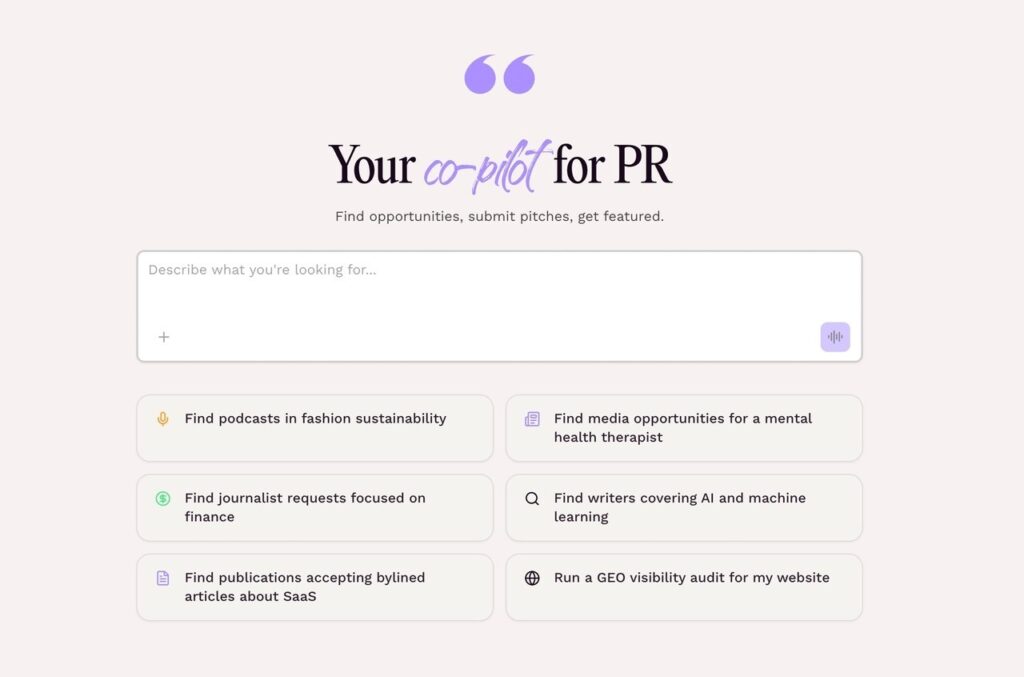
Source: Featured.com
The goal isn't replacement.
"Enhance, by deleting the busywork. It's called a co-pilot for a reason. Nobody wants a PR strategy written by a robot, but everybody wants the two hours of monitoring and filtering through opportunities back."
One lesson from developing AI tools surprised him.
"The workflow matters more than the chat. Early on we assumed people wanted to talk to an AI; what they actually wanted was for the AI to do repetitive work in the background and surface the result."
"The best AI in PR is the one you notice least."
Despite his optimism about AI, Farmiloe remains clear on where humans create value.
"The point of view."
He believes that no model can replicate lived experience.
"AI can find the opportunity and draft a first pass, but it can't have a take worth quoting."
"The thing a reporter actually wants comes from a human who's been in the room. Relationships, judgment, and knowing what's actually true stays with a human."
The industry data supports this vision. For 59% of PR professionals, “storytelling and content creation” is the #1 in-demand skill of 2026, followed by “media relations” (44%).
He argues that AI tools should prioritize relevance over volume, even if volume is easier to sell, as 67% of journalists say they prefer custom story angles tailored to their audience or beat.

Source: Unsplash
Perhaps Farmiloe's most provocative prediction concerns the future relationship between PR and search.
"For a decade, SEO owned visibility. Now the answer engine decides who gets surfaced, and it surfaces sources it trusts, which is earned media's home turf."
As a result, he believes brands need to rethink how they measure visibility. In fact, brands see a 6–12% average boost in branded search volume following significant media coverage.
"The old goal was to rank a page. The new goal is to be the source a model cites."
In other words, the future is becoming less click-driven and more citation-driven.
"Citation-first content is built to be referenced, not just clicked."
For brands looking to prepare, his advice is simple.
"Become quotable."
He points to journalist-source platforms as increasingly important assets in an AI-powered ecosystem.
"We run HARO, where a journalist connects with a source every 23 seconds, so I can tell you demand for credible experts is only growing."
"The brands feeding that today become the sources AI cites tomorrow."
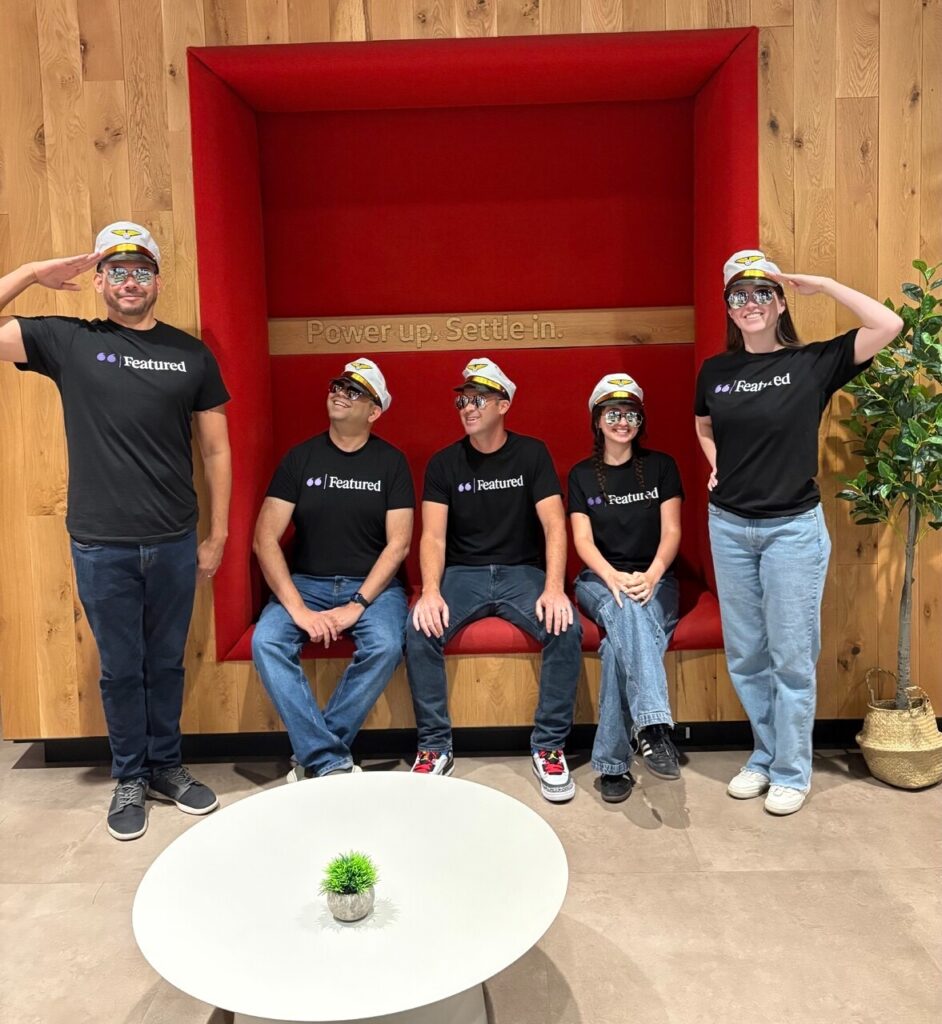
Looking ahead five years, Farmiloe expects PR workflows to change dramatically.
"You start your day with the opportunities already found and prioritized, drafts already started, and your job is to add the judgment and the voice."
In this future, PR professionals spend less time searching and more time making decisions.
"The PR pro stops being a searcher and a sender and becomes an editor and a strategist."
He expects visibility metrics to evolve too.
"Visibility gets measured by where you show up in AI answers, not just where you rank or who clipped you."
The skills that matter most, however, remain surprisingly familiar.
"The fundamentals of judgment, relationships, and knowing how to make experts citable doesn't change."
What will change is the need to understand AI systems themselves.
"Similar to the way the last generation learned SEO, future PR professionals will need to learn AI."

Source: Pexels
For all the disruption AI may bring, Farmiloe is ultimately optimistic.
"What excites me most is that expertise might finally beat access."
For years, visibility often belonged to the loudest voices or the best-connected networks.
"If AI gets good at matching the right expert to the right moment, the best source for a story has a real shot at the spotlight regardless of who knows who."
And if companies take only one lesson away from the AI revolution in PR, he says it should be this:
"Stop using AI to send more. Today."
"Every mass-personalized AI pitch makes the whole channel worse and makes your brand part of the noise. Point the AI at finding fewer, better opportunities instead."
Keen to hear from industry experts? Visit it.com Domains blog and follow us on social media.
Continue reading at the it.com Domains blog...
Brett Farmiloe, founder and CEO of Featured.com, has had a front-row seat to this transformation. Having built a platform that connects experts with journalists and publishers, he's now focused on what comes next: AI-powered PR workflows that help professionals spend less time searching and more time contributing meaningful expertise.
In the interview with it.com Domains, Farmiloe shares why AI is disrupting PR, where most companies are getting it wrong, and why the future belongs to experts who can become trusted sources in an AI-driven world.
PR Was Built on Access, Not Outcomes
According to Farmiloe, the traditional PR model had a fundamental flaw before AI arrived.
"PR was built on access, not outcomes," he says. "Whether you got coverage came down to who you knew and how big your media list was, which rewarded relationships and budgets over actually having something worth saying. The best expert in a field could be completely invisible just because no reporter had their number."
The biggest inefficiency wasn't necessarily writing pitches or creating content. It was the work that happened before any of that.
"The matching," Farmiloe explains. "Figuring out which journalist needs what, right now, and getting in front of them before the story's written. Most of PR's hours went into research, list-building, and follow-ups, not the insight a source actually brings or the communications strategy of a company."
He believes that alone made PR ripe for AI disruption.
"Any industry where the core workflow is still 'search, match, and follow up by hand' is a good use case for AI disruption."
One example he points to is founders and subject matter experts who possess valuable insights but struggle to gain visibility.
"Previously, the founder would have trouble getting quoted anywhere because they weren't aware of the opportunities, and how their expertise fits. The moment they could see and respond to live journalist requests, they were in national outlets within weeks. The expertise was always there; access was the bottleneck."
Perhaps most surprising, he says, is how much of PR remains manual.
"We see smart, busy executives blocking off 15–30 minutes a day on their calendar to open and respond to Help a Reporter Out (HARO) queries. That's time spent on scanning emails and pitching, instead of executing strategy that will move their business forward."
Source: Unsplash
The Moment AI Changed Everything
For Farmiloe, the turning point came when AI began changing how people discover information online.
"When I watched search traffic to publishers go into AI answers," he recalls. "We'd built a business connecting experts to publishers so readers would find them, and suddenly the reader wasn't clicking through to the publisher at all."
Instead, users were increasingly receiving synthesized answers directly from AI systems.
"The front page had moved into the AI model, and being 'the source' stopped meaning ranking a page and started meaning getting cited by an AI."
That realization fundamentally changed how he viewed the future of PR. The challenge was no longer simply earning media coverage. It was becoming the source that AI systems reference when generating answers.
AI's Real Superpower Isn't Writing
75–80% of PR professionals were expected to use AI tools for content creation, media monitoring, and campaign analytics by the end of 2025. However, despite the attention AI receives for content generation, Farmiloe believes most people misunderstand where its real value lies.
"Discovery," he says without hesitation. "Finding the right opportunity and matching it to the right expert at the right moment, which is where the hours go and where machines are great."
But the expertise itself still belongs to humans. In fact, over 40% of PR practitioners expect AI to complement their work rather than replace it.
"The judgment of what to say still belongs to the human. The search for where to say it shouldn't."
This distinction is at the heart of his philosophy about AI in communications.
"If your AI is helping you pitch more people faster, you're using it backwards."
According to Farmiloe, one of the biggest mistakes companies make is treating volume as success.
"AI tempts you to 10x your outreach when the whole game is relevance. The mistake is automating the pitch instead of automating the research that tells you whether to pitch at all."
Source: Unsplash
The Rise of AI Slop
Journalists have become increasingly vocal about the flood of AI-generated pitches arriving in their inboxes. PR professionals echo that: about a quarter mention that journalists are receiving too many AI-generated pitches. Farmiloe sees this firsthand.
"The second it's used to mass-produce pitches nobody needed," he says when asked where AI-generated PR content goes wrong. "Every journalist I've ever spoken with is concerned about the AI slop that lands in their inbox."
The issue isn't necessarily the quality of the writing itself.
"The failure isn't the writing quality, it's using AI to scale noise instead of to find signal."
Reporters, he says, are becoming exceptionally good at identifying low-value AI outreach.
"Almost instantly. Reporters read more cold pitches than anyone, so a templated AI pitch is very easy to spot. As a result, the bar for pitching has gone up. Now, a generic pitch signals you didn't even bother."
The numbers support this trend.
"When we brought back Help a Reporter Out (HARO) last year, we knew we would tackle lots of issues based around quality and trust. About 21% of all pitches that go through HARO are 100% AI-generated, while 35% of journalists who use HARO to find a source completely opt out of seeing a 100% AI-generated pitch."
The result is a growing divide.
"There's people opting in a little too far on the source side, while journalists are responding by opting out."
Building an AI Co-Pilot for PR
This challenge helped shape Featured's vision for an AI-powered PR co-pilot.
"Featured is an AI co-pilot for PR that finds media opportunities and helps you act on them," Farmiloe explains.
Those opportunities can include journalist requests, podcasts, bylined articles, speaking engagements, awards, and AI visibility opportunities. According to MuckRack, automation of such tasks can save PR teams an average of 6.2 hours per week.
"Through a chat interface and automated workflows, Featured's AI does the discovery and matching of those opportunities."
He compares the product to modern aviation.
"It's almost like when you fly on an airplane. The take-off and landing are typically handled by human pilots. The rest of the flight is typically automated, with the pilots on standby."
"That's similar to how Featured's co-pilot for PR works: it just does the manual, tedious work in the middle and leaves the important bookends to the experts."
Source: Featured.com
The goal isn't replacement.
"Enhance, by deleting the busywork. It's called a co-pilot for a reason. Nobody wants a PR strategy written by a robot, but everybody wants the two hours of monitoring and filtering through opportunities back."
One lesson from developing AI tools surprised him.
"The workflow matters more than the chat. Early on we assumed people wanted to talk to an AI; what they actually wanted was for the AI to do repetitive work in the background and surface the result."
"The best AI in PR is the one you notice least."
What Humans Still Do Best
Despite his optimism about AI, Farmiloe remains clear on where humans create value.
"The point of view."
He believes that no model can replicate lived experience.
"AI can find the opportunity and draft a first pass, but it can't have a take worth quoting."
"The thing a reporter actually wants comes from a human who's been in the room. Relationships, judgment, and knowing what's actually true stays with a human."
The industry data supports this vision. For 59% of PR professionals, “storytelling and content creation” is the #1 in-demand skill of 2026, followed by “media relations” (44%).
He argues that AI tools should prioritize relevance over volume, even if volume is easier to sell, as 67% of journalists say they prefer custom story angles tailored to their audience or beat.
Source: Unsplash
The Future of Visibility Is Citation
Perhaps Farmiloe's most provocative prediction concerns the future relationship between PR and search.
"For a decade, SEO owned visibility. Now the answer engine decides who gets surfaced, and it surfaces sources it trusts, which is earned media's home turf."
As a result, he believes brands need to rethink how they measure visibility. In fact, brands see a 6–12% average boost in branded search volume following significant media coverage.
"The old goal was to rank a page. The new goal is to be the source a model cites."
In other words, the future is becoming less click-driven and more citation-driven.
"Citation-first content is built to be referenced, not just clicked."
For brands looking to prepare, his advice is simple.
"Become quotable."
He points to journalist-source platforms as increasingly important assets in an AI-powered ecosystem.
"We run HARO, where a journalist connects with a source every 23 seconds, so I can tell you demand for credible experts is only growing."
"The brands feeding that today become the sources AI cites tomorrow."

What the PR Professional of 2030 Looks Like
Looking ahead five years, Farmiloe expects PR workflows to change dramatically.
"You start your day with the opportunities already found and prioritized, drafts already started, and your job is to add the judgment and the voice."
In this future, PR professionals spend less time searching and more time making decisions.
"The PR pro stops being a searcher and a sender and becomes an editor and a strategist."
He expects visibility metrics to evolve too.
"Visibility gets measured by where you show up in AI answers, not just where you rank or who clipped you."
The skills that matter most, however, remain surprisingly familiar.
"The fundamentals of judgment, relationships, and knowing how to make experts citable doesn't change."
What will change is the need to understand AI systems themselves.
"Similar to the way the last generation learned SEO, future PR professionals will need to learn AI."
Source: Pexels
Expertise Finally Has a Chance
For all the disruption AI may bring, Farmiloe is ultimately optimistic.
"What excites me most is that expertise might finally beat access."
For years, visibility often belonged to the loudest voices or the best-connected networks.
"If AI gets good at matching the right expert to the right moment, the best source for a story has a real shot at the spotlight regardless of who knows who."
And if companies take only one lesson away from the AI revolution in PR, he says it should be this:
"Stop using AI to send more. Today."
"Every mass-personalized AI pitch makes the whole channel worse and makes your brand part of the noise. Point the AI at finding fewer, better opportunities instead."
Keen to hear from industry experts? Visit it.com Domains blog and follow us on social media.
Continue reading at the it.com Domains blog...



