




- Joined
- Oct 12, 2023
- Posts
- 255
- Reaction score
- 69
Instead of browsing websites directly, users are starting to rely on AI agents to do the searching, filtering, and even purchasing for them. This shift is known as agentic commerce, and it requires relooking at the ways the websites are built.
Ecommerce websites are at the center of this shift. AI-driven shopping is growing quickly, with McKinsey’s report on agentic commerce showing that automation and AI could influence up to 70% of customer interactions across industries. At the same time, updates around AI shopping show that product discovery is increasingly handled by intelligent systems rather than manual browsing. For online stores, this means visibility is no longer just about ranking in search results - it is about being selected by an AI agent during the decision-making process.
Let’s explore what it means to build a website compatible with AI agents, how new industry protocols like Google UCP and Open AI ACP shape this space, and what businesses should understand to stay visible.
Agentic commerce describes an online purchasing model where AI systems act on behalf of users to complete shopping journeys. These agents can search, evaluate options, and make decisions based on user preferences.
Large platforms are already moving in this direction. For example, Google has introduced Universal Commerce Protocol (UCP), which aims to standardize how product and merchant data is shared across systems. Similarly, OpenAI is working on the Agentic Commerce Protocol to help AI agents interact with digital storefronts.
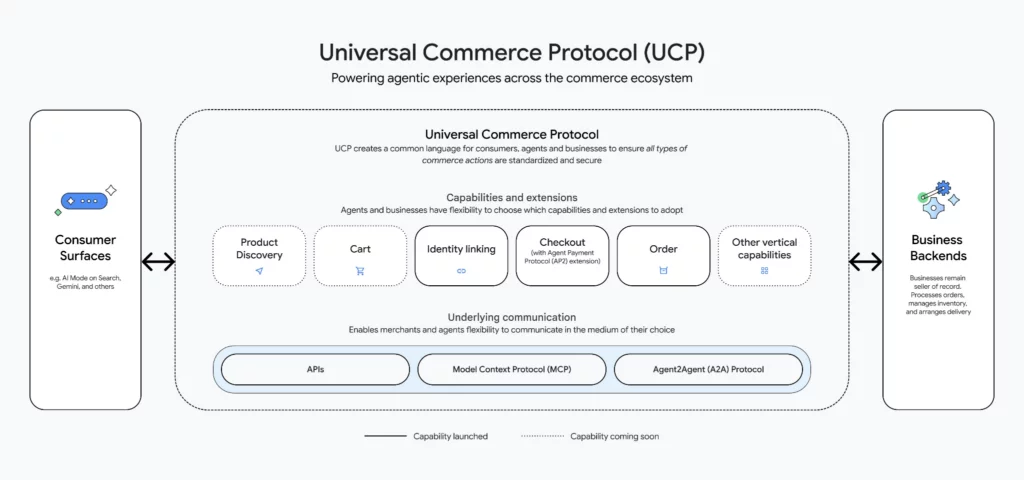
Source: Google
At the same time, platforms like Shopify are signaling strong momentum for agentic commerce, enabling millions of merchants to sell to ChatGPT users. This reflects a broader shift where AI shopping experiences are becoming more structured and automated for businesses of all sizes.
Unlike traditional users, an AI agent does not “see” a website visually. It reads structured data, extracts meaning, and evaluates trust signals.
This changes what matters:

Source: Unsplash
In many ways, this overlaps with principles behind what is Generative Engine Optimization. The goal is to make content understandable not just for search engines, but for AI systems making decisions.
Study by McKinsey & Company suggests that AI-driven journeys can reduce decision time by up to 50%, meaning agents will prioritize sources that are easy to interpret and trust.
Content needs to be organized in a way that machines can interpret quickly. This includes:
AI agents look for credibility indicators before recommending a product. These include:
This mirrors how search engines evaluate E-E-A-T (Experience, Expertise, Authoritativeness, and Trustworthiness), but with a stronger focus on purchase decision-making.
Protocols like UCP and ACP rely on up-to-date information. This means:
Without this, an AI agent may skip a website entirely. This can benefit traditional SEO as well: for example, Google now requires that out-of-stock products must still display a buy button, but it can no longer be active or hidden
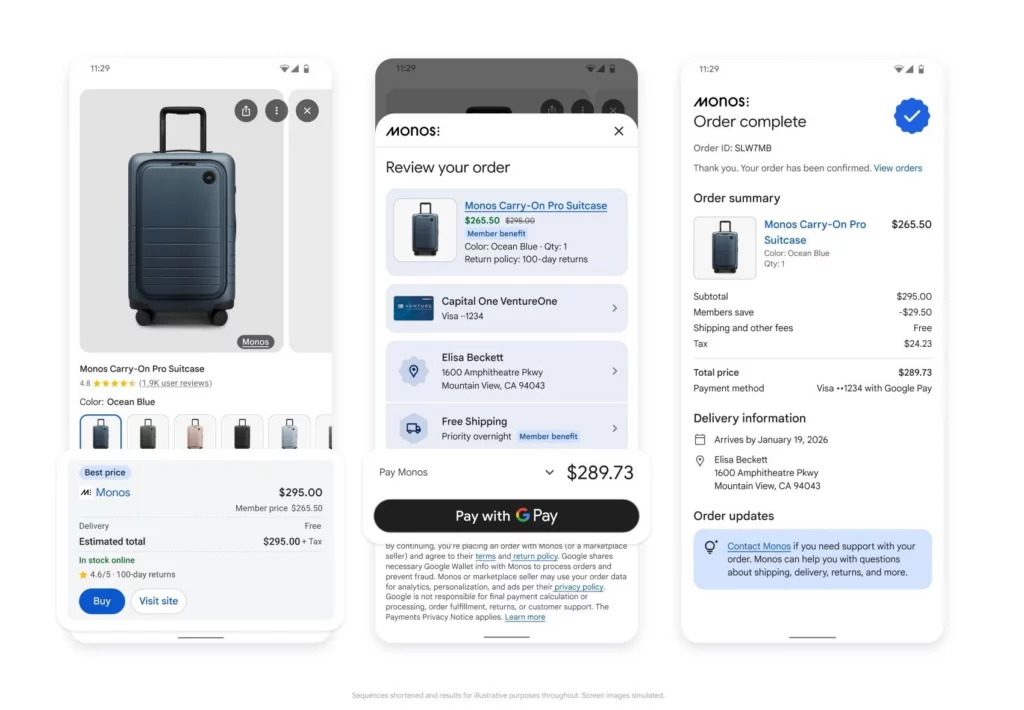
Source: Google
Domain names still play a key role, even in an AI-driven environment. They act as a trust signal and a recognizable identity for both users and machines.
For example, a domain like shoptools.it.com or smartdeals.it.com can communicate relevance and clarity. Short, descriptive names help AI agents understand context faster.
When selecting a domain, businesses often use tools like ChatGPT to generate ideas aligned with search and AI behavior.
Factors that may influence domain effectiveness include:
Start by understanding what data is accessible. This includes structured markup, product feeds, and API outputs. A useful approach is to simulate queries and prompts using AI tools and analyze which sources are cited.
Explore how your platform can integrate with standards like UCP and ACP. These protocols are designed to make product data usable across systems. Resources from Google and OpenAI outline how data can be structured.
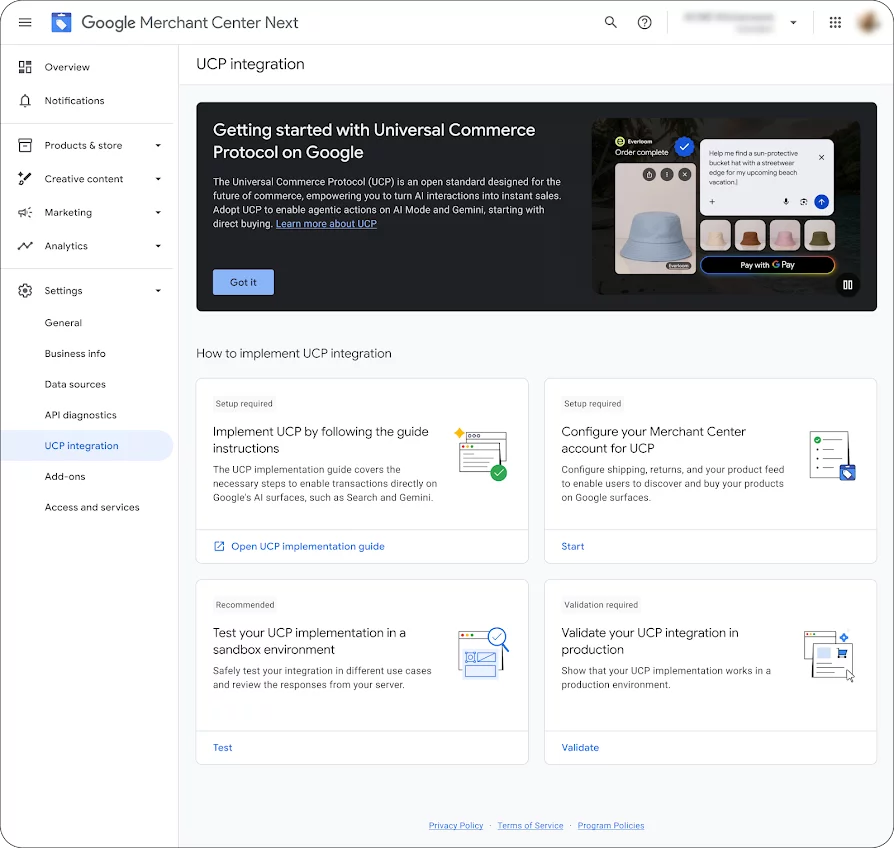
Source: Google
Content should answer clear questions and provide concise information. This includes:
Breaking content into smaller sections helps AI systems extract relevant insights.
Even the best content needs exposure. Using content promotion tactics can increase the chances of being discovered and cited by AI platforms. This may include syndication, structured feeds, or partnerships with marketplaces.
Agentic commerce is still evolving. Regular testing helps identify what works. For example, businesses can monitor how often their products appear in AI shopping results or agent recommendations.

Source: Unsplash
The combination of UCP, ACP, and platform innovation is shaping a new type of digital experience. Instead of browsing dozens of pages, users may rely on one AI agent to complete the process. These systems are becoming more personalized and context-aware.
This suggests that optimizing for AI agents is not only about visibility, but also about being selected as the best option.
Agentic commerce introduces a new layer between businesses and customers - the AI agent. Websites that are structured, transparent, and easy to interpret are more likely to be included in these automated journeys.
Understanding protocols like UCP and ACP, along with strong content and domain strategy, helps create a website compatible with AI agents.
An ai agent is a software system that can perform tasks on behalf of a user. In commerce, it can search for products, compare options, and even complete purchases based on preferences.
AI shopping uses algorithms to analyze user intent and recommend products. It often pulls data from multiple sources using protocols like UCP to present the best options quickly.
Agentic commerce is a model where AI agents handle the buying journey. Instead of browsing manually, users rely on automated systems to find and purchase products.
Agentic AI refers to systems that can act independently across many tasks. Agentic commerce is a specific use case focused on shopping and transactions.
Optimizing for AI agents involves structuring data clearly, using standardized protocols, maintaining accurate information, and ensuring content is easy for machines to interpret.
Looking for tips for success in AI environments? Visit it.com Domains blog and follow us on social media.
Continue reading at the it.com Domains blog...
Ecommerce websites are at the center of this shift. AI-driven shopping is growing quickly, with McKinsey’s report on agentic commerce showing that automation and AI could influence up to 70% of customer interactions across industries. At the same time, updates around AI shopping show that product discovery is increasingly handled by intelligent systems rather than manual browsing. For online stores, this means visibility is no longer just about ranking in search results - it is about being selected by an AI agent during the decision-making process.
Let’s explore what it means to build a website compatible with AI agents, how new industry protocols like Google UCP and Open AI ACP shape this space, and what businesses should understand to stay visible.
What Agentic Commerce Means for Business
Agentic commerce describes an online purchasing model where AI systems act on behalf of users to complete shopping journeys. These agents can search, evaluate options, and make decisions based on user preferences.
Large platforms are already moving in this direction. For example, Google has introduced Universal Commerce Protocol (UCP), which aims to standardize how product and merchant data is shared across systems. Similarly, OpenAI is working on the Agentic Commerce Protocol to help AI agents interact with digital storefronts.
Source: Google
At the same time, platforms like Shopify are signaling strong momentum for agentic commerce, enabling millions of merchants to sell to ChatGPT users. This reflects a broader shift where AI shopping experiences are becoming more structured and automated for businesses of all sizes.
How AI Agents Interact with Websites
Unlike traditional users, an AI agent does not “see” a website visually. It reads structured data, extracts meaning, and evaluates trust signals.
This changes what matters:
- Clear product data and structured markup of attributes like price, reviews and FAQs
- Transparent pricing and availability
- Clear product entities and tags (e.g. use cases, suitability, size, etc.)
- Consistent brand signals across pages
- Machine-readable content instead of visual design alone
Source: Unsplash
In many ways, this overlaps with principles behind what is Generative Engine Optimization. The goal is to make content understandable not just for search engines, but for AI systems making decisions.
Study by McKinsey & Company suggests that AI-driven journeys can reduce decision time by up to 50%, meaning agents will prioritize sources that are easy to interpret and trust.
Key Elements of a Website Compatible with AI Agents
Structured and Accessible Content
Content needs to be organized in a way that machines can interpret quickly. This includes:
- Product schemas and metadata
- FAQs and clearly labeled sections
- Consistent formatting across pages
Trust and Verification Signals
AI agents look for credibility indicators before recommending a product. These include:
- Reviews and ratings
- Secure checkout processes
- Clear return policies
This mirrors how search engines evaluate E-E-A-T (Experience, Expertise, Authoritativeness, and Trustworthiness), but with a stronger focus on purchase decision-making.
Real-time Data Availability
Protocols like UCP and ACP rely on up-to-date information. This means:
- Accurate stock levels
- Current pricing
- Updated product descriptions
Without this, an AI agent may skip a website entirely. This can benefit traditional SEO as well: for example, Google now requires that out-of-stock products must still display a buy button, but it can no longer be active or hidden
Source: Google
The Role of Domain Names in Agentic Commerce
Domain names still play a key role, even in an AI-driven environment. They act as a trust signal and a recognizable identity for both users and machines.
For example, a domain like shoptools.it.com or smartdeals.it.com can communicate relevance and clarity. Short, descriptive names help AI agents understand context faster.
When selecting a domain, businesses often use tools like ChatGPT to generate ideas aligned with search and AI behavior.
Factors that may influence domain effectiveness include:
- Keyword relevance
- Simplicity and readability
- Brand consistency across channels
Step-by-step:Optimizing for AI Agents
Step 1: Map How AI Agents Read Your Site
Start by understanding what data is accessible. This includes structured markup, product feeds, and API outputs. A useful approach is to simulate queries and prompts using AI tools and analyze which sources are cited.
Step 2: Align with Commerce Protocols
Explore how your platform can integrate with standards like UCP and ACP. These protocols are designed to make product data usable across systems. Resources from Google and OpenAI outline how data can be structured.
Source: Google
Step 3: Refine Content for Machine Understanding
Content should answer clear questions and provide concise information. This includes:
- Product benefits
- Specifications
- Use cases
Breaking content into smaller sections helps AI systems extract relevant insights.
Step 4: Strengthen Visibility through Distribution
Even the best content needs exposure. Using content promotion tactics can increase the chances of being discovered and cited by AI platforms. This may include syndication, structured feeds, or partnerships with marketplaces.
Step 5: Test and Iterate with AI Tools
Agentic commerce is still evolving. Regular testing helps identify what works. For example, businesses can monitor how often their products appear in AI shopping results or agent recommendations.
Source: Unsplash
How Agentic Commerce Is Evolving
The combination of UCP, ACP, and platform innovation is shaping a new type of digital experience. Instead of browsing dozens of pages, users may rely on one AI agent to complete the process. These systems are becoming more personalized and context-aware.
This suggests that optimizing for AI agents is not only about visibility, but also about being selected as the best option.
Agentic commerce introduces a new layer between businesses and customers - the AI agent. Websites that are structured, transparent, and easy to interpret are more likely to be included in these automated journeys.
Understanding protocols like UCP and ACP, along with strong content and domain strategy, helps create a website compatible with AI agents.
FAQs
What is an AI agent?
An ai agent is a software system that can perform tasks on behalf of a user. In commerce, it can search for products, compare options, and even complete purchases based on preferences.
How does AI shopping work?
AI shopping uses algorithms to analyze user intent and recommend products. It often pulls data from multiple sources using protocols like UCP to present the best options quickly.
What is agentic commerce?
Agentic commerce is a model where AI agents handle the buying journey. Instead of browsing manually, users rely on automated systems to find and purchase products.
What is the difference between agentic commerce and agentic AI?
Agentic AI refers to systems that can act independently across many tasks. Agentic commerce is a specific use case focused on shopping and transactions.
How to optimize the website for AI agents?
Optimizing for AI agents involves structuring data clearly, using standardized protocols, maintaining accurate information, and ensuring content is easy for machines to interpret.
Looking for tips for success in AI environments? Visit it.com Domains blog and follow us on social media.
Continue reading at the it.com Domains blog...



